
zdjęcia www

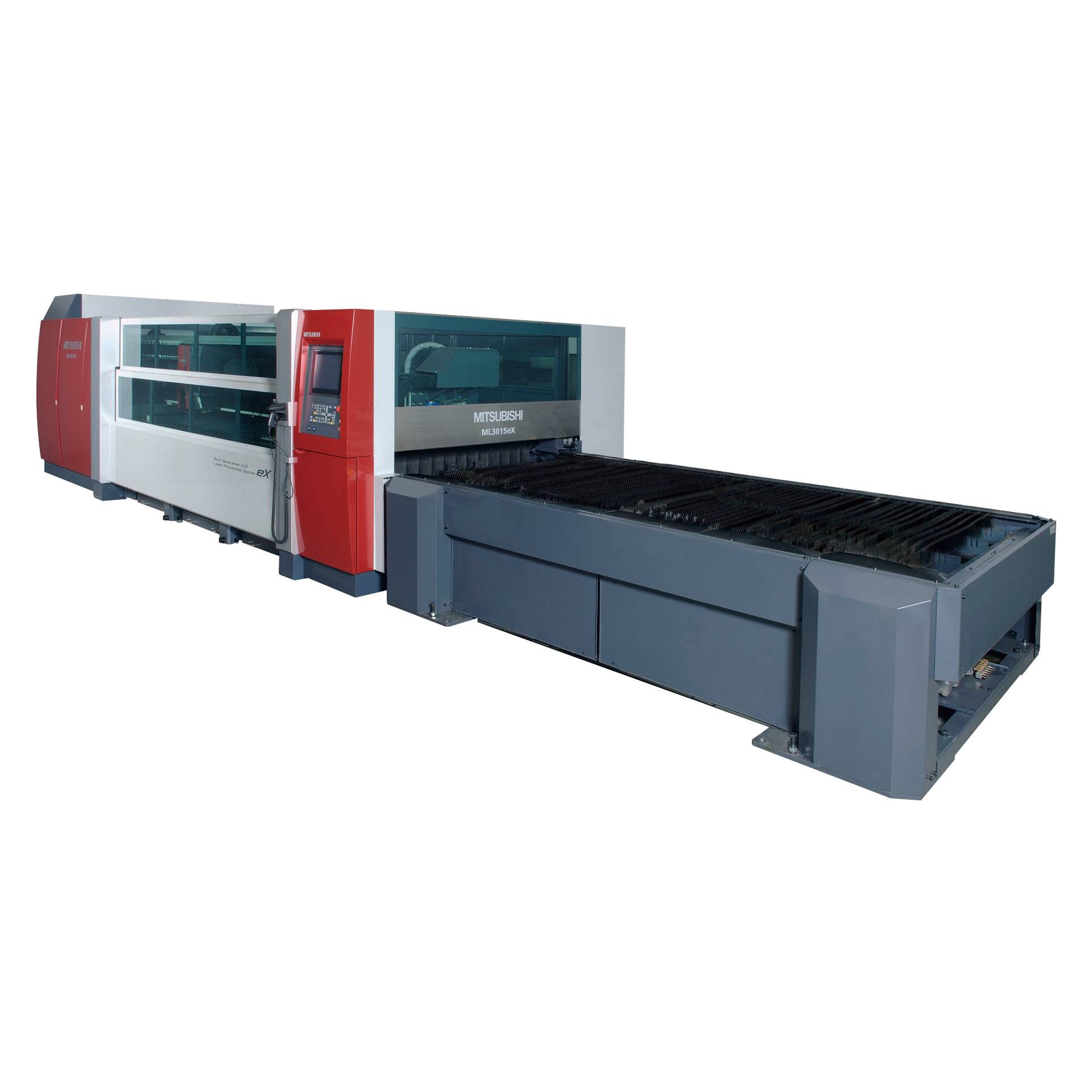
Laser cutting machine Mitsubishi eX CO2 Cross Flow series

Laser cutting machine Mitsubishi eX CO2 Cross Flow series – designed for high-efficiency and precision sheet metal processing. A key innovation in this model is the integration of the unique Cross Flow laser source, which offers exceptional beam stability, minimal consumption of technical gases, and significantly lower operating costs compared to conventional CO₂ resonators.

  • Working area: 3000 × 1500 mm
  • Laser power: 4.5 kW

These machines are ideal for companies seeking reliable and economical thermal cutting solutions with consistent, high-quality performance.

Schedule a meeting with a customer advisor.

Our experts will analyze your situation, answer all your questions, and prepare a personalized offer.

Laser cutting machine Mitsubishi eX CO2 Cross Flow series – Technical data:

Machine design: Flying optics, shuttle tableAxis travel path X/Y/Z: 3100/1565/150 mm
Resonator type: Cross-Flow MitsubishiStart up time: 3 min
Control unit: M700 Mitsubishi, 15’’ touch screenSimultaneous speed  X and Y axis: 140m/min
Max. sheet size: 3100 x 1565 mmMax. working speed: 50m/min
Max. weight per sheet: 930 kgPossitioning accuracy: 0,05/500mm (oś X,oś Y)
Laser cutting system incl. pallet changer: 10180 x 3130 x 2260 mmRepeatabillity: 0,01mm (oś X,oś Y)
Weight: 10600 kgWorking head: PH-XS Mitsubishi, Auto Focus, lenses 5’’, 7,5’’ oraz 10’’

Laser cutting machine Mitsubishi eX CO2 Cross Flow series – Technology characteristics:

Cross Flow resonator with so-called transverse gas excitation systemhighest quality cutting of various materials in a wide range of thicknesses
no high-speed turbinePatented technology for cutting reflective materials including aluminum and copper
no generating lamphighest quality of stainless steel cutting practically unattainable by other machines
small number of mirrorsadvanced control with touch screen
only two pairs of ceramic electrodessimple operation – possibility of loading programs with a barcode scanner
very low consumption of laser gas, only 3 l/1 hour, 3 cylinder/1 yearadvanced external software Lantek Expert or Sigma Nest
low operating costsproduction and final assembly take place at Mitsubishi plants in Japan
quick start of the whole system – ready to work in 3 minEco Mode function reduces standby power consumption by up to 99%

range depends on the power of the resonator:

The thickness range and quality of the cut depends on the quality of the input material and the specific shape of the part to be cut. With 6000W of power, assuming ideal input material parameters, shape cutting that does not cause limitations for laser processing, and greater tolerance for the roughness of the cut edge, the nominal cutting range is increased. Possible ranges are given in parentheses. For cutting the upper ranges of stainless steel and aluminum, a 10′ lens is required regardless of the resonator power.

Schedule a meeting with a customer advisor.

Our experts will analyze your situation, answer all your questions, and prepare a personalized offer.


FAQ


Applications of Laser cutting machine Mitsubishi eX CO2 Cross Flow series

  • Laser cutting machines are used in a wide range of industries, primarily in the aerospace, automotive, and home appliance (white goods) sectors. When considering the purchase of an industrial laser cutter, it’s important to analyze several key factors. Different technologies used in laser cutters have varied applications and significantly influence production processes.
  • A laser cutter directly impacts production capabilities, cutting precision, and overall process efficiency. Over the years, new models have been equipped with additional technologies, accessories, and automation features that not only speed up production but also increase the level of automation.
  • The ability to precisely cut complex shapes and patterns makes laser cutters ideal for producing high-precision parts such as machine components, jewelry, or decorative elements. They are also highly scalable, making them suitable for both small workshops and large-scale manufacturing facilities.

What Materials Can Laser Cutters Process?

  • Laser cutting machines are designed to cut flat sheets made of:
    – Titanium
    – Stainless steel
    – Mild steel
    – Aluminum
    – Copper
    – Brass
  • Before purchasing, you should define the intended use, including the type and thickness of materials to be cut, as well as the cutting process. These factors determine the required laser power and accessories. With a wide range of models available, clearly defining your production needs will help in selecting the right equipment. The most advanced machines are highly automated and best suited for high-volume production.
  • Each laser cutter we offer is a long-term investment. High-quality components and meticulous craftsmanship ensure your investment quickly pays off.

CO₂ and Fiber Laser Cutters

  • CO₂ laser technology has been widely used in metalworking for decades. CO₂ machines use mirrors to guide the laser beam, and the precision depends on the alignment and cleanliness of the optical path. Today, this technology is mainly used for cutting thicker stainless steel sheets.
  • However, CO₂ lasers are increasingly being replaced by fiber laser cutting machines, which use fiber-optic cables to deliver the beam with high precision. Fiber lasers offer better energy efficiency, lower maintenance costs, and higher cutting quality.
  • We offer both CO₂ and modern fiber laser cutters from trusted manufacturers like Mitsubishi and Baykal. These machines are tailored to market demands and offer intuitive controls, touchscreen interfaces, and fast startup times—ideal for boosting production performance and operator comfort.

Laser Cutting – Modern Technologies & Energy Efficiency

  • Modern laser cutters offer high-quality and accurate cutting across a variety of materials. Many machines now include features like Eco Mode, which reduces standby energy consumption by up to 99%.
  • Choosing the right cutter requires aligning machine capabilities with your production workflow. That’s why it’s essential to invest in fiber laser technology, advanced control systems, and automated material handling that reduce operator involvement and improve overall productivity.

Fiber Laser Technology in Modern Laser Cutters

  • Fiber laser cutters are at the forefront of precision and efficiency in cutting. They generate an extremely focused beam of light, allowing them to cut even intricate shapes with exceptional accuracy.
  • Fiber laser cutters are also versatile, suitable for a wide range of materials. This makes them a top choice across various industries. The fiber laser process improves cutting speed, minimizes material waste, and enhances cut quality far beyond what traditional methods can achieve.
  • Investing in fiber laser cutting technology is a smart move for companies seeking to boost quality, productivity, and profitability.

Adapting a Laser Cutter to Your Production Needs

  • Tailoring your laser cutter to fit your production needs is crucial for improving efficiency and quality. In today’s competitive market, investing in flexible and precise technology is essential.
  • Start by understanding your specific production requirements—what materials will be cut, their thickness, and desired cutting speeds.
  • CO₂ lasers are ideal for plastics, wood, and glass
  • Fiber lasers are better suited for metal cutting
  • Next, configure cutting parameters such as laser power, cutting speed, and focus settings. Advanced control systems enable precise adjustments for optimal results across various materials.
  • Regular maintenance and calibration are also essential for long-term performance and machine lifespan. Investing in automation, such as material loading and unloading systems, can further enhance productivity while minimizing the need for operator intervention.

What to Consider When Choosing a Laser Cutter?

  • Choosing the right laser cutting machine is a strategic decision for any company aiming to improve efficiency and product quality. With so many models available, making an informed decision is key.
  • First, define the types of materials you’ll be cutting—metal, plastic, wood, or glass—as each requires a different laser type.
  • Laser power is another crucial factor, affecting both cutting speed and material thickness. Higher power enables faster cutting but also means higher cost, so balance is essential.
  • The work area size must match the largest material dimensions you plan to cut.
  • Lastly, look for machines offering high accuracy and repeatability—critical for maintaining consistency in serial production.

Check also


#LaserCutters #FiberLaserTechnology #MetalProcessing #LaserEngineering #CNCmachines #Polteknik #IndustrialCutting #PrecisionManufacturing #FiberLaser #SmartProduction #IndustrialAutomation #CO2Laser #ModernIndustry #ProductionEfficiency

Video:

    Contact us!

    Polteknik Sp. z o.o.
    +48 58 684 86 35
    +48 601 569 456

    Service Department
    +48 58 680 22 00

    serwis@polteknik.pl

    Spare Parts and Logistics Department
    +48 58 680 22 01

    km@polteknik.pl